
“I considered investing in Japanese real estate for three years. Once I found the
right building and verified the numbers, I made the decision within a week.”
I run a company in the United Kingdom and already own several commercial properties, including our corporate headquarters. I was therefore familiar with real estate investment, but Japan was a different proposition.

The market, leasing practices and financing environment were unfamiliar. Above all, I needed to be certain that purchasing an entire building in Japan as an overseas investor was a sound decision. For nearly three years, I watched the market without taking action.

I did not arrive in Tokyo on this occasion expecting to buy immediately. I inspected several buildings in areas including Shiomi and Shinjuku. For each opportunity, I examined far more than the headline yield: location, achievable rents, vacancy risk, repair costs, tenant agreements and future resale potential all mattered.

I was not interested in investing simply because someone described a return as attractive.

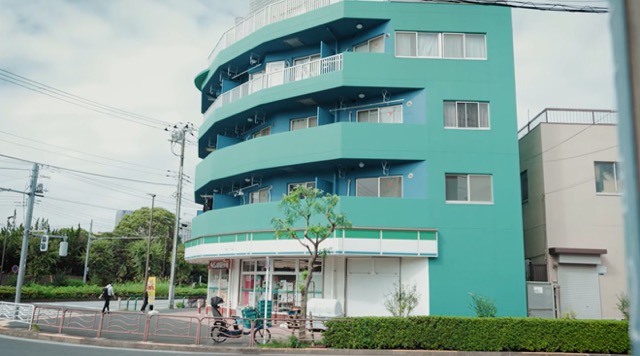
The Shiomi property initially required careful consideration. It was not directly beside the station, and the building was older. I asked the team to verify the available bank financing, surrounding market rents, recent comparable transactions, historical repair records, the lease terms for every unit and the contract with the convenience store occupying the ground floor.

What impressed me was that the advisers did not present only the positive aspects. Whenever I raised a concern, they approached the seller, obtained the relevant documentation and returned with a clear explanation of the repair history and contractual details.

The seller initially indicated that the property would not be sold below ¥400 million. After several rounds of negotiation, I acquired the entire building for ¥415 million.

The team also helped arrange financing of approximately 60% through a Japanese financial institution. This enabled me to structure the acquisition with local leverage rather than funding the full purchase entirely from my own capital.

Ultimately, the numbers drove my decision.

The property is within walking distance of Shiomi Station and approximately seven minutes from Tokyo Station by train, yet it offered a yield of around 6%. A convenience store occupies the ground floor under a long-term lease, while multiple residential units on the upper floors generate stable monthly rental income.

We also considered the district’s longer-term prospects, including the planned Yurakucho Line extension and a proposed new station nearby. However, I did not invest on future potential alone. I wanted an asset that produced income immediately and could be held comfortably over the long term.

The relationship has continued well beyond the acquisition. When a residential unit becomes vacant, the local management team markets it at updated rental terms. They also coordinate repairs, CCTV installation, the convenience-store tenancy and the building’s day-to-day operational requirements.

The greatest convenience is knowing that the property continues to be inspected and managed locally even while I am in the United Kingdom.

Investing in overseas real estate is not simply a matter of being introduced to a promising asset. The quality of the due diligence, the strength of the price negotiation and the standard of post-acquisition management are ultimately far more important.

I spent three years considering an investment in Japan. Once I was presented with an asset and a set of numbers I could fully understand and verify, the decision itself was remarkably quick.

Today, I own my first income-producing building in Japan.
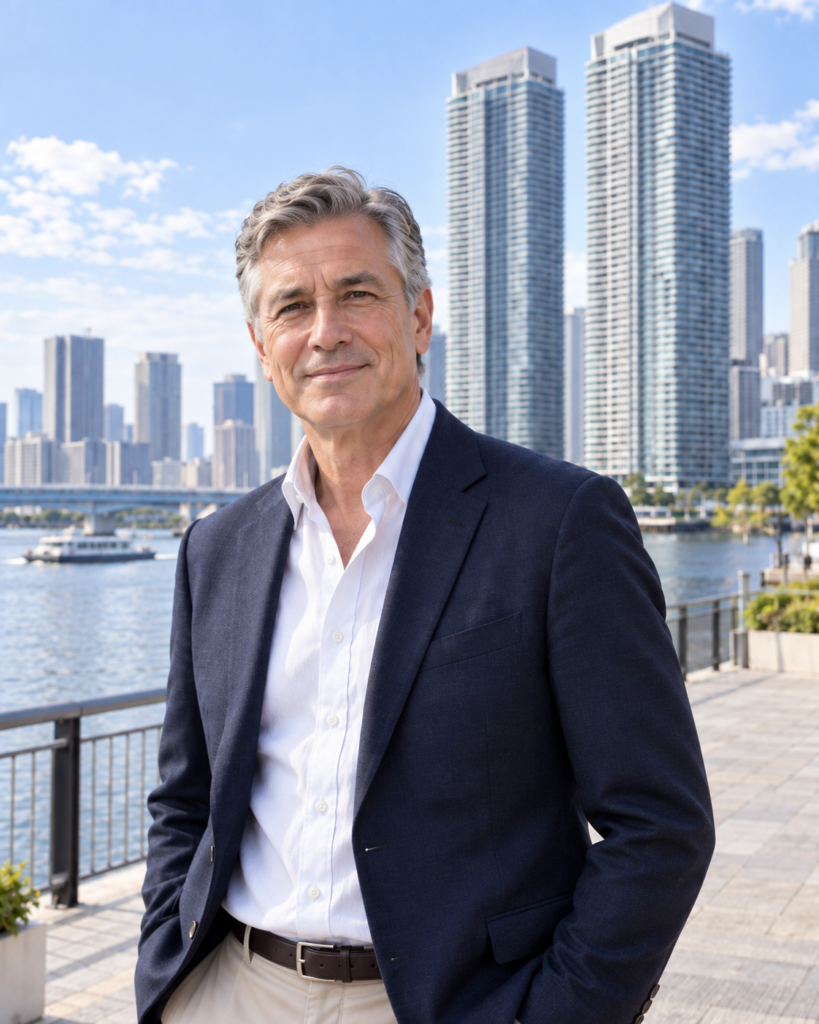
※ Editorial note: This English-language persona and portrait are fictionalized adaptations created to anonymize the original client. The transaction details are based on the supplied testimonial..
David Collins
British Business Owner, Late 50s
Purchased an Income-Producing Residential Building in Tokyo.
Completed a ¥415 million acquisition.